

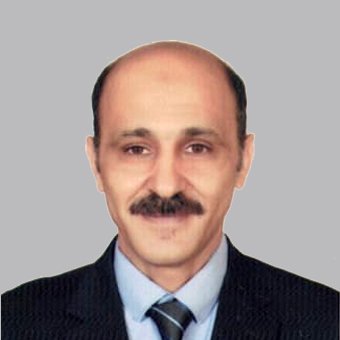
Biography
I am a Prof in the field of Educational Research- Assessment and Statistics. I worked as the director of university performance measurement unit in a Saudi University, and the director of accreditation and quality assurance center at Yarmouk University- Jordan, and the director of admission and registration unit at two different public universities in Jordan.
I have been teaching courses in Educational Research, Statistics, Measurement, and Evaluation for Bachelor, Master, and Ph.D. students since I graduated from University of Alabama- USA in 2007.
I have several publications related to assessment and evaluation in higher education and program evaluation.
Education
PhD: University of Alabama, USA 2007
Master: Yarmouk University- Jordan
Research Interests
- Insuficient Effort Respnding
- Educational Program Evaluation
- Reliability and Validity
- Item Response Theory
Selected Publications
- Shraim, R & Alquraan, M. (In Press). Assessing the effect of explicit and implicit negation of negative items of attitude scale on its psychometric properties using item response theory. Irbid University Journal, x(x), xx-xx.
- Altheeb, O. & Alquraan, M. (In Press). Evaluating Teachers Intel Training Program. Irbid University Journal, x(x), xx-xx.
- Shawashreh, L. & Alquraan, M. (2021). Assessing measurement accuracy of multistage adaptive testing under different testing modes. Jordanian Journal of Educational Sciences (JJES), 17(2), 285-299.
- Obidat, A. H., Alquraan, M., & Obeidat, M. H. (2020). Data on factors characterizing the eLearning experience of secondary schoolteachers and university undergraduate students in Jordan. Data in Brief, 33, 106402, https://doi.org/10.1016/j.dib.2020.106402.
- Jawarneh, R. & Alquraan, M. (2020). The performance of Lzp Person-fit Statistic in detecting Insufficient Effort Responses according to the Likert Item Scale Points. Jordanian Journal of Educational Sciences (JJES), 16(3), 385-398.
- Alquraan, M. (2019).The effect of insufficient effort responding on the validity of student evaluation of teaching, Journal of Applied Research in Higher Education, 11(3), 604-615.
- Alquraan, M., & Al-Shaqsi, A. (2019). Math and Science Post-basic Education School Teachers’ Use of Assessment for Learning and Assessment of Learning Practices in Oman. Journal of Educational and Psychological Studies [JEPS], 13(4), 615-627.
- Alghazo, A. & Alquraan, M. (2018). The Effectiveness of Bootstrapping Procedure in Estimating Person-fit Statistic Cutoff- Score for Polytomous Items in Noncognitive Scales. Jordanian Journal of Educational Sciences (JJES), 14(1), 1-12.
- Alghazo, A. & Alquraan, M. (2017). Evaluating quality of academic programs at Yarmouk University from students perspectives, Islamic University Journal for Educational and Psychological Studies, 45(4), 390-418.
- Al-Shammari, Z, and Alquraan, M. (2018). "FOLLOW Intervention Strategy for Children with Intellectual Disabilities: Development and Effects." The International Journal of Pedagogy and Curriculum 25 (4), 33-43. doi:10.18848/2327-7963/CGP/v25i04/33-43.
- Alquraan, M., & Kuwaiti, A. A. (2017). Differential Item Functioning in Students Rating of Teaching Effectiveness Surveys in Higher Education According to Academic Disciplines: Data from a Saudi University. Journal of Educational and Psychological Studies [JEPS], 11(4), 770-780.
- Alquraan, M. (2016). DIF Items Effects on Kuder-Richardson 20 Formula and Construct Validity: An Exploration Using the Mantel-Haenszel Method. International Journal of Quantitative Research in Education, 3(4), 266-276.
- Al Kuwaiti, A., Alquraan, M., & Subbarayalu, A. V. (2016). Understanding the effect of response rate and class size interaction on students evaluation of teaching in a higher education. Cogent Education, 3(1), 1204082.
- Alquraan, M (2014). A cross-cultural study of students’ perceptions of assessment practices in higher education. Education Business and Society Contemporary Middle Eastern Issues; 7(4).
- Alquraan, M. and Mclean, J. (2011).Assessment Practices Used in Evaluating Learning Outcomes in Higher Education in Jordan as Perceived by Students. Educational Journal, 98(2), 11-36, Kuwait University. (ISSN:1029-810).
- Alquraan, M., Bsharah, M., and Albustanji, M. (2010). Oral and Written Feedback and Their Relationship with Using Different Assessment Methods in Higher Education. International Journal of Applied Educational Studies. 7(1), p43-58. (ISSN:1996-773X).
- Alquraan, M. and Aljarah, A (2011). Psychometric Revision of a Jordanian Version of the Metamemory in Adulthood Questionnaire (MIA): Rasch Model, Confirmatory Factor Analysis, and Classical Test Theory Analyses. Education, Business and Society: Contemporary Middle Eastern Issues. 4(4), 292-302 (ISSN: 1753-7983).
- Fraij, F., Alquraan, M., Dababse, A., and Al-Obaidy, S. (2010). The Impact of Employing Technology in Teaching a Mathematics Course. International Journal of Innovation and Learning. 8(2).p (170-188)(IJIL,ISSN:1471-8197) DOI: 10.1504/IJIL.2010.034348.
- Alquraan, M., Alshraideh, M., and Bsharah, M. (2010). Psychometric Properties and Differential Item Functioning (DIF) Analyses of Jordanian Version of Self-Assessed Wisdom Scale. . International Journal of Applied Educational Studies. 9(1), p52-66. (ISSN:1996-773X).
- Alquraan, M and Casebeer, C. (2010). Beliefs of Jordanian Higher Education Students Concerning Assessment. Paper presented at Southwest Educational Research Association Annual Meeting 2010, New Orleans, Louisiana, USA, February 17–20, 2010.
- Alquraan, M (2010). The Use of Assessment for Learning in Higher Education: Effect of Assessment Methods and College. Paper presented to World International Conference in Education (WICE-2010), Amman-Jordan, 19-20/5/2010.
- Alquraan, M and Casebeer, C. (2010). The Beliefs of Low-Performing University Students Concerning the Uses of Assessment: A Study From Jordan. Paper presented to World International Conference in Education (WICE-2010), Amman-Jordan, 19-20/5/2010.
- Cassbeer, C and Alquraan, M. (2011). Low-Performing Jordanian Postsecondary Students: What are their Beliefs Concerning the Classroom Assessment Practices of their Instructors? International Journal of Academic Research in Business and Social Sciences. August 2011, Vol. 1, Special Issue
Professional Experience
| Position | Place | From | Up To |
| Professor | Al Ain University- College of Education | September 2022 | Now |
| Professor | Yarmouk University- College of Education- Department of Counseling and Educational PsychologyIrbid- Jordan | September 2015 | Now |
| Associate professor | University of Dammam, KSA.Sabbatical Leave: Al-Hussein Bin Talal University/ Jordan | August 2014 | September 2015 |
| Associate professor | College of Education/ Al-Hussein Bin Talal University/ Jordan | 26-8-2012 | 13-9-2014 |
| Assistant professor | College of Education/ Al-Hussein Bin Talal University/ Jordan | 26-8-2007 | 25-8-2012 |
| Ph.D Student at University of Alabama-USA | 15-8-2004 | 15-8-2007 | |
| Full time lecturer | College of Education/ Al-Hussein Bin Talal University/ Jordan | 7-2-1998 | 15- 7-2004 |
Teaching Courses
- Descriptive Eeducational Statistics
- Inference Statistics (Graduate Level)
- Educational Research
- Educational Measurement and Evaluation.
- Qualitative Research (Ph.D Level)
- Seminar in Psychological Assessment
- Program Evaluation (Ph.D Level)
- Advanced Research methods in Education (PhD level)
- Advanced Statistical Analysis in Education (PhD level)
Expertise related to UN Sustainable Development Goals
In 2015, UN member states agreed to 17 global Sustainable Development Goals (SDGs) to end poverty, protect the planet and ensure prosperity for all.
This person’s work contributes towards the following SDG(s):